Semi-Automatic vs Automatic Espresso Machine: Which Is Better? (October 2026)
A semi-automatic machine leaves the grind, the dose and the shot timing to you, while an automatic machine does those steps with one button. Pick semi-automatic if you want control over each cup, and pick automatic if you want a drink with little effort.
On this page (15 sections)
- How a semi-automatic machine works
- How an automatic machine handles the same steps
- Control over the shot
- Speed and everyday ease
- Milk drinks: two steam wands, two levels of help
- Grinding and beans
- Cleaning and upkeep
- Size and counter space
- Warranty and service
- Which type fits your situation
- What to buy with a semi-automatic machine
- Mistakes beginners make with each type
- Who should pick a semi-automatic machine
- Who should pick an automatic machine
- Which one to pick for your kitchen
A semi-automatic espresso machine leaves the grind, the dose and the shot timing to you, while an automatic machine handles those steps with a button. The choice shapes your morning more than any single spec, so this comparison looks at how each type works, what you control and what you give up.
We compared a semi-automatic Breville Bambino with a fully automatic Philips 2200 Series, one from each type, using their specs and features.


How a semi-automatic machine works
A semi-automatic machine heats the water and builds the pressure, but you do the rest. You grind and measure the coffee, tamp it, lock the portafilter in and start and stop the shot yourself.
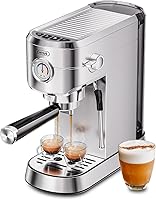
The Bambino is a clear example of this type. It takes ground coffee in a 54 mm portafilter with a 19 gram dose, and Breville says it heats up in about 3 seconds.
How an automatic machine handles the same steps
A fully automatic machine grinds, tamps and brews at the push of a button. You choose espresso, coffee or hot water on its touchscreen and adjust the strength and the volume, and the machine does the rest.
The Philips 2200 Series works this way. Once you set the drink, it comes out the same way each time.
Control over the shot
Semi-automatic gives you the most control, because the grind, the dose and the timing are all yours. A small change to the grind can change how the shot tastes, which is what many people want to learn.
Automatic machines give you control within set limits. You can adjust the strength and the volume, but the grind and the tamp follow the machine's own settings.
Speed and everyday ease
An automatic machine is quicker on a busy morning. You press a button, and the machine grinds, tamps and brews, so there are fewer steps to remember.
A semi-automatic machine takes longer for each drink, since every step is yours. Those steps get quicker with practice, usually within a few weeks.
Semi-automatic vs automatic espresso machine on a busy morning
A semi-automatic machine turns the morning into a short routine. You grind, dose, tamp, lock in and pull the shot, then rinse the basket and wipe the wand.
An automatic machine turns the same routine into a button press and a rinse. The grind and the tamp happen inside the machine, so most of your time goes to the milk and the cleanup.
Milk drinks: two steam wands, two levels of help
Both machines make you do the milk by hand. The Bambino has a manual steam wand, and Philips gives the 2200 Series a classic milk frother, so you steam or froth the milk and add it to the coffee.
Philips says the frother works with plant-based milk too, which helps a household that drinks more than one kind. If you want a machine that textures the milk for you, neither of these does it, and the Bambino Plus or a guided machine would.
Grinding and beans
The Bambino takes ground coffee, so you need a separate grinder for fresh beans. Choose a burr grinder that gives a fine, even grind, since the grind shapes the taste of the shot more than almost anything else.
The Philips grinds the beans inside the machine, so you fill the bean hopper and skip the second piece of kit. That's one less machine on the counter, but you give up the choice of grinder.
Our espresso machine grinder guide explains the trade-off, and the built-in grinder guide covers machines that grind and still leave you in charge.
Cleaning and upkeep
A semi-automatic machine needs the portafilter rinsed after each shot, the wand wiped after steaming and a descale on the schedule in the manual. The routine is short, and it becomes a habit within a few weeks.
The Philips has a removable brew group that rinses under the tap, and Philips says its AquaClean filter covers up to 5,000 cups before a descale. That saving depends on changing the filter when the machine asks.
Our descaling guide covers the steps for a semi-automatic machine.
Size and counter space
The Bambino is narrow at 6.3 inches wide, 13.7 inches deep and 12 inches tall. The Philips 2200 Series is larger at 9.6 inches wide, 14.6 inches deep and 17 inches tall, so it needs more width and height on the counter.
| Product | Best for | Machine type | Coffee input | Size (W x D x H) | Our score |
|---|---|---|---|---|---|
| Breville Bambino BES450 | learning the shot yourself | Semi-automatic | Ground coffee | 6.3 x 13.7 x 12 in | 8.6 |
| Philips 2200 Series Fully Automatic | one-touch coffee at home | Fully automatic | Whole beans | 9.6 x 14.6 x 17 in | 7.9 |
If the counter is tight, the Bambino fits more easily. If you want a machine that grinds and brews without a second piece of kit, the Philips takes more space but does more of the work.
Warranty and service
Breville gives the Bambino a 1 year limited warranty. Keep the receipt and the box, and read what the warranty covers before you buy.
A fully automatic machine has more parts and more electronics than a semi-automatic one. Check the warranty and the service terms before you buy either type.
Which type fits your situation
Use these situations as a quick filter before you read the picks below.
- Small counter or a studio kitchen: the semi-automatic Bambino is about 6.3 inches wide, against 9.6 for the Philips.
- A household where several people make coffee: the automatic machine gives each person the same drink from one button.
- You want to learn the craft: semi-automatic shows you what each change does to the cup.
- You want the least cleaning and the fewest steps: automatic removes the portafilter and the tamp from your morning.
What to buy with a semi-automatic machine
A semi-automatic machine needs a grinder, and a scale makes the dose easy to repeat. An automatic machine like the Philips grinds for you, so it needs neither.
Mistakes beginners make with each type
With a semi-automatic machine, the common mistake is a grind that's too coarse, which makes a fast, sour shot. Change one setting at a time, and taste each shot before you change the next.
With an automatic machine, the common mistake is ignoring the descale and filter reminders. The filter and the descale keep the flow steady and the taste clean, so set a reminder for each one.
Who should pick a semi-automatic machine
Pick semi-automatic if you want to learn espresso and control each cup. It suits someone who likes to adjust the grind and the dose, and who has time for the routine.
It also suits a beginner who wants to build skill before buying a more automated machine later. Those skills carry over to other semi-automatic machines.
Who should pick an automatic machine
Pick automatic if you want a drink with little effort on a busy morning. It suits a household where more than one person makes coffee, since the buttons give the same drink each time.
It also suits someone who doesn't want to buy and manage a separate grinder. Keep the bean hopper filled and the machine descaled, and most of the work is done for you.
Which one to pick for your kitchen
Pick semi-automatic for control and skill, and pick automatic for ease and repeat results. The choice rests on how much of the work you want to do yourself.
If you're not sure you need an espresso machine at all, compare it with a drip pot in espresso machine vs coffee maker.
If you're still unsure, read our what is a semi-automatic espresso machine guide and how to choose an espresso machine. For a set of picks, see the best espresso machines for beginners roundup, and the Breville Bambino review for a closer look at the semi-automatic side.
The home espresso machine guide covers the wider set of first machines, with the grinder and the budget trade-offs in one place.
Frequently asked questions
What is the difference between a semi-automatic and an automatic espresso machine?
A semi-automatic machine needs you to grind, dose, tamp and start the shot, while an automatic machine grinds, tamps and brews when you press a button. The semi-automatic gives you more control, and the automatic gives you a faster, more repeatable drink.
Is a semi-automatic espresso machine harder to use?
It takes more steps and a few weeks of practice, but the routine gets short once the grind and the tamp feel natural. Start with one drink, change one setting at a time and keep notes on each shot.
Do automatic espresso machines make better coffee?
Not always, since an automatic machine gives a repeatable drink with little effort, while a semi-automatic machine gives you control to change the cup. Which one tastes better depends on the beans, the grind and the drink you want.
Which is better for a beginner, semi-automatic or automatic?
Semi-automatic suits a beginner who wants to learn espresso, while automatic suits a beginner who wants a drink with little effort. Pick the one that matches how much of the work you want to do yourself.